How to Rent an Apartment in Korea 2025: Jeonse vs Monthly Rent, Contracts & Tips
Korea’s rental market is unique—especially the Jeonse (large deposit, no monthly rent). This guide explains the main rental types, how the contract works, what documents you need, and how to protect your deposit.
1) Rental Types in Korea
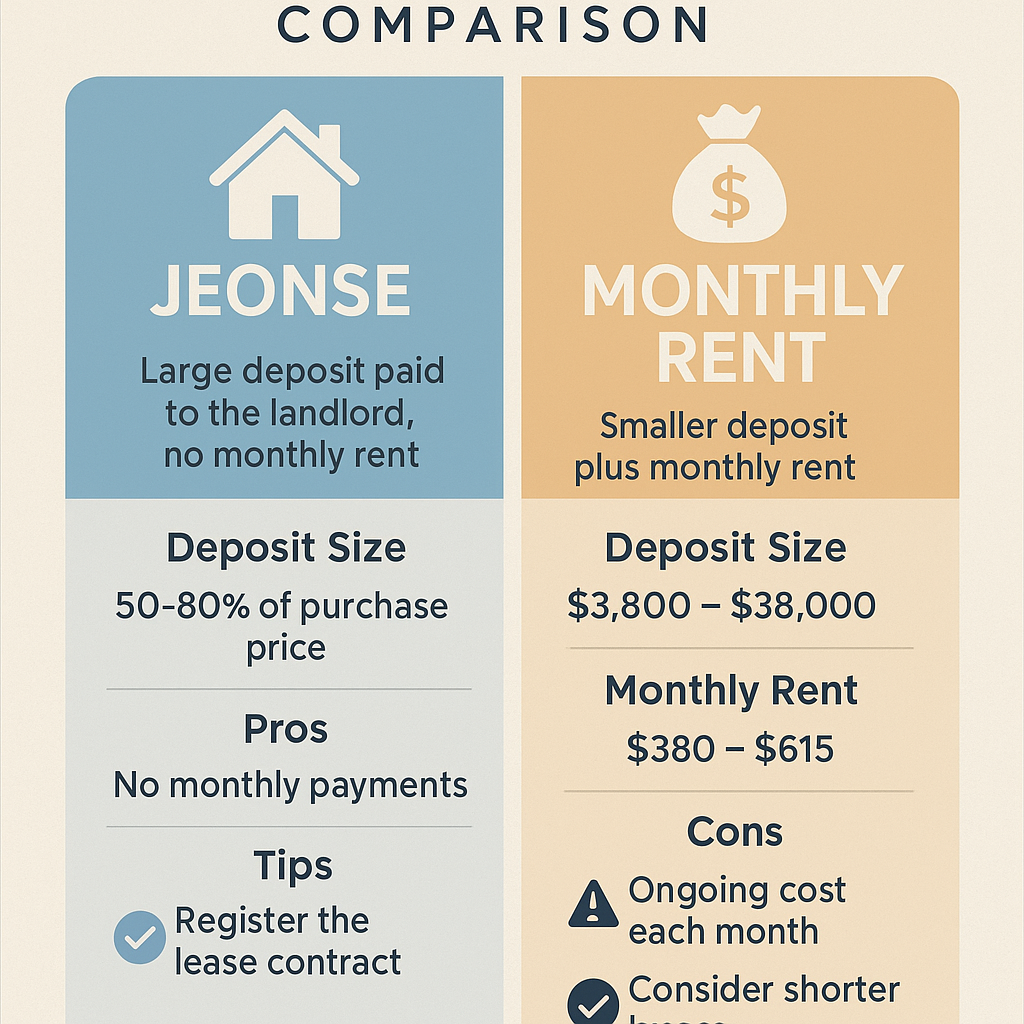
Jeonse (Deposit-Only Lease)
- Deposit size: ~50–80% of purchase price (apt: KRW 300–500M typical)
- Monthly rent: none
- Pros: lower monthly outflow, stable for long stays
- Cons: high upfront cash; deposit-return risk on move-out
Monthly Rent
- Deposit: KRW 5–50M (≈ USD 3,800–38,000)
- Monthly: KRW 500k–800k for a studio in Seoul
- Pros: low upfront cost; flexible
- Cons: ongoing expense every month
Half-Jeonse
- Higher deposit + reduced monthly (e.g., KRW 100M + KRW 300k)
Safety tip: Register the contract (확정일자), file your move-in (전입신고), and consider a deposit-return insurance (HUG/SGI) for Jeonse.
2) Contract Process
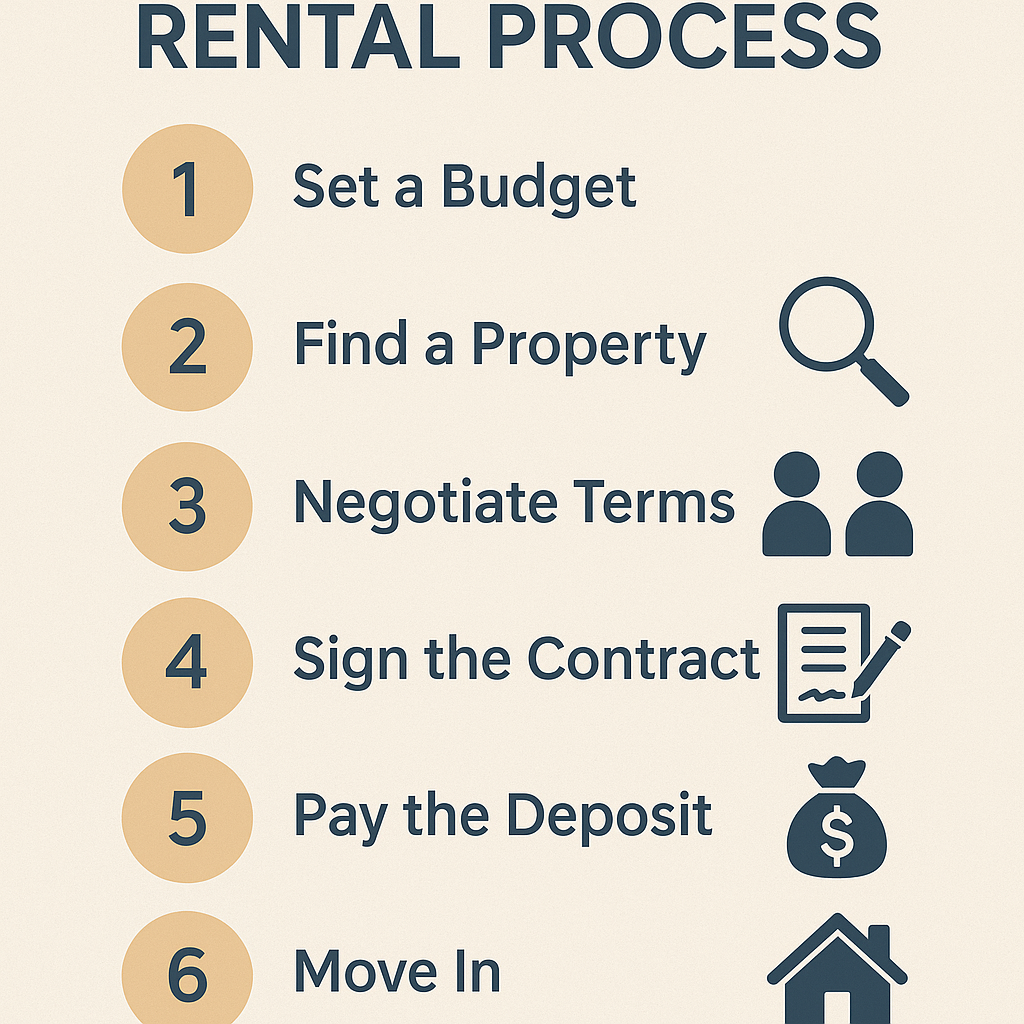
- Find a property via licensed agents or apps (Zigbang, Dabang).
- Negotiate terms: rent, deposit, management fees, move-in date.
- Sign the standard lease contract (Korean; bring a translator if needed) and pay ~10% as down payment.
- Check the registry (등기부등본) to verify ownership and liens.
- Pay remaining amounts (interim + balance) by bank transfer and keep records.
- Protect your rights: file 확정일자 and 전입신고 at the local office.
3) Documents You May Need
- Passport & ARC
- Visa copy (for stay period)
- Employment or income certificate (sometimes requested)
- Bank account for transfers
4) Common Issues & Tips
- Language barrier: contracts are in Korean; use an interpreter or trusted agent.
- Deposit-return risk (Jeonse): insure if possible; avoid properties with heavy liens.
- Management fees: check what’s included (heating, elevator, cleaning, parking).
- Short stays: monthly rent, share houses, or serviced residences are practical.
Disclaimer: Requirements and prices vary by district and time. Always check the latest official guidance.