
Bitcoin Partial Selling Strategy: A Practical Guide to Safe Profit Taking (2025)
When to sell is hard. How to sell can be simple—sell in parts, not all at once.
Why Partial Selling?
Timing the exact top is nearly impossible. Partial selling reduces regret, locks in gains over time, and keeps your portfolio liquid for new opportunities. Instead of chasing perfection, you secure average exit prices and let the trend do the heavy lifting.
Key idea: The goal isn’t max profit—it’s reliable profit.
What Is Partial Selling?
Partial selling means you split your exit into multiple tranches, either by price levels or time intervals. You might sell 10–20% on each step up, or unload a fixed percentage monthly regardless of price.
Three Ways to Execute
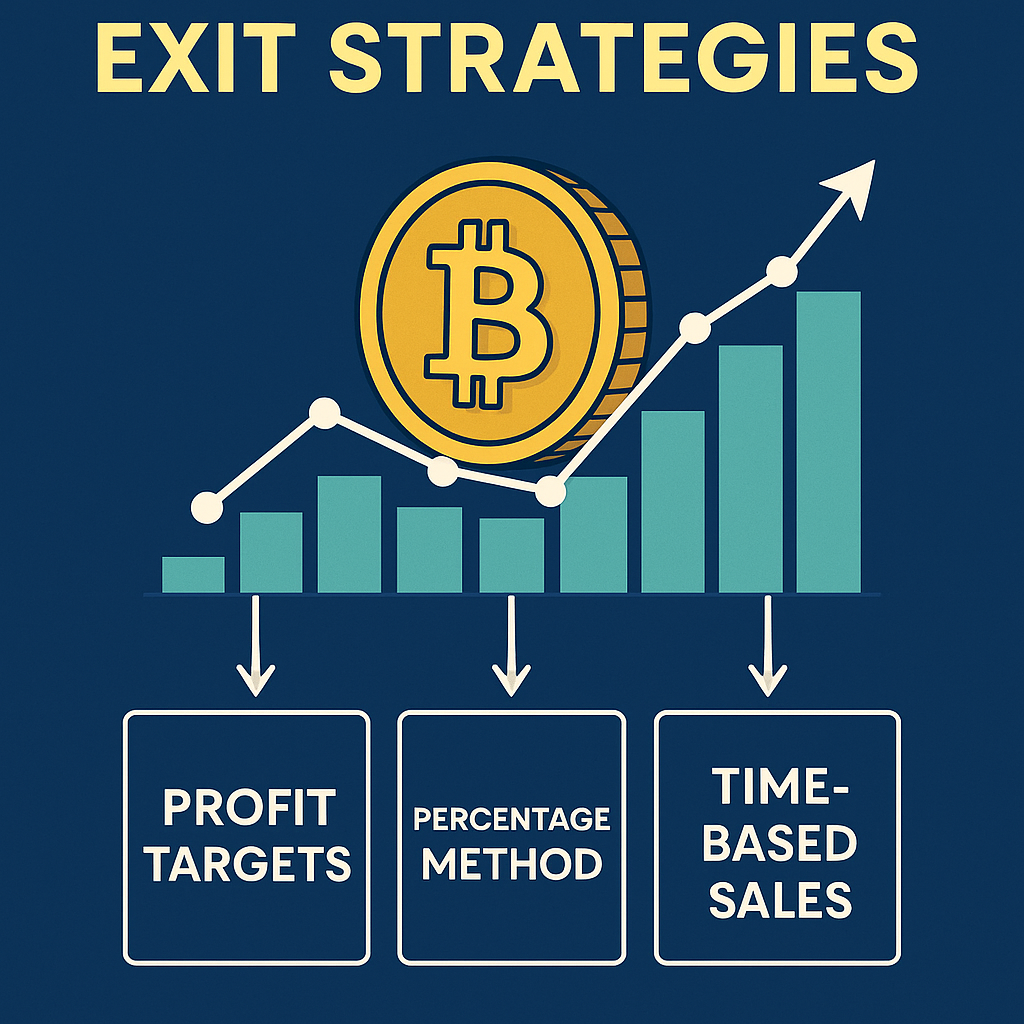
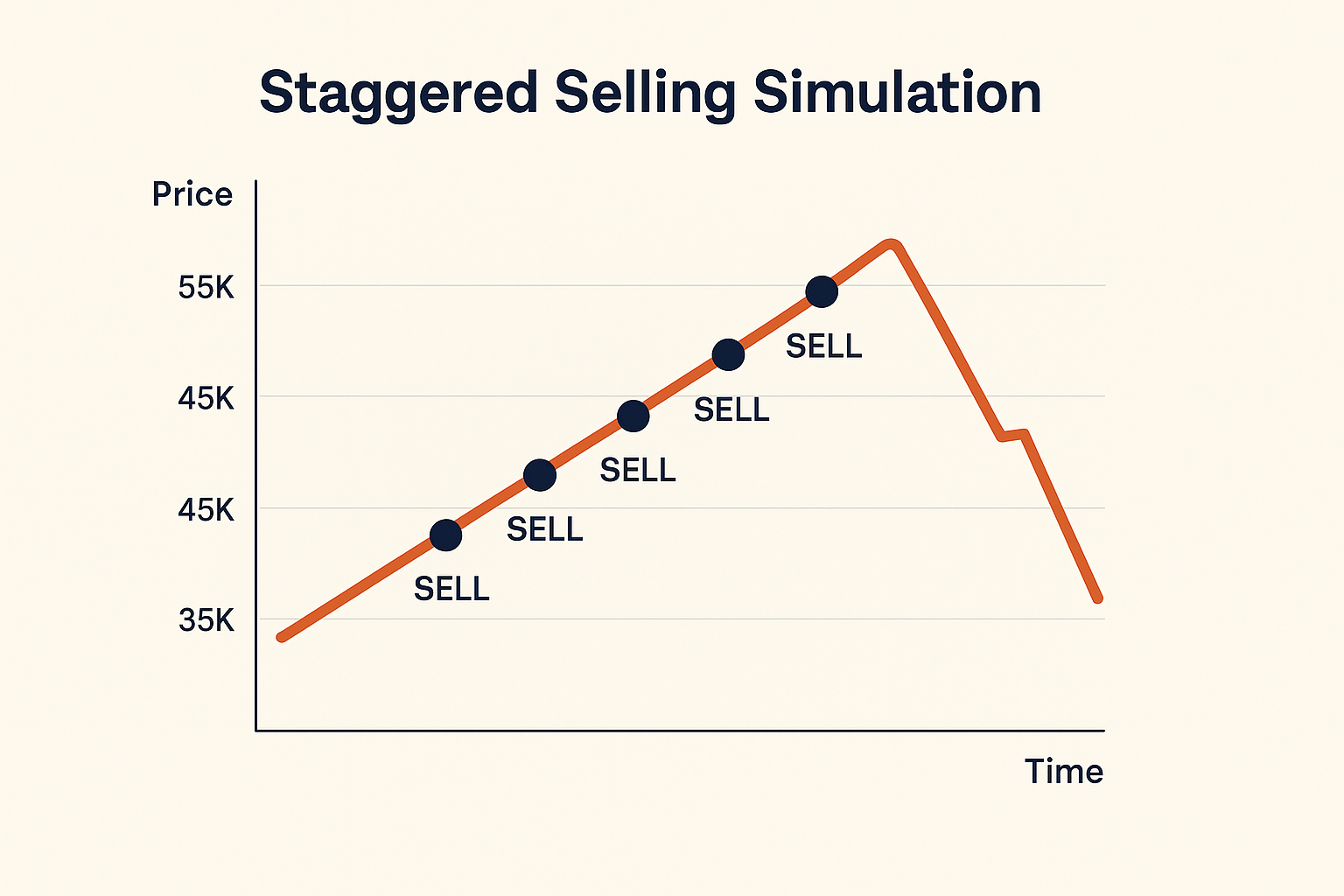
1) Price-Based Ladders
- Every +5% → sell 10% of position.
- Every +10% → sell 20% of position.
This captures upside gradually while reducing exposure as price rises. You’ll rarely nail the exact top— but you’ll book gains on the way there.
2) Time-Based DCA Selling
- Sell 5% monthly, or 10% quarterly—no matter the price.
Great for long-term holders who value routine and low stress. Automate with scheduled/recurring orders when your exchange supports it.
3) Target Return Tiers
- At +30% total return → sell 20% of position.
- At +50% total return → sell another 30%.
Pre-defined targets remove emotion. If the rally extends, you still keep a core position.
A Simple Walkthrough (1M KRW Example)
Imagine you’ve invested 1,000,000 KRW. Here’s a simple ladder:
- +10% (1,100,000 KRW) → sell 200,000 KRW
- +20% (1,200,000 KRW) → sell 300,000 KRW
- Keep the remaining 500,000 KRW for trend continuation
You lock in profits on the way up while still letting part of your position ride.
Risks and Trade-offs
- You might sell “too early” in strong uptrends—this is normal and part of the plan.
- Partial selling prioritizes certainty over perfection.
- Define your rules in advance and stick to them to avoid emotional decisions.
Pro Tips for 2025
- Write your plan before the rally. Decide your sell levels or schedule now.
- Automate where possible. Use recurring or laddered limit orders to reduce emotion.
- Keep a core position. Even after laddered sells, consider holding a long-term core.
- Track realized vs. unrealized P&L. Seeing booked gains reduces FOMO.