Understanding cpi: A Small DCA Investor’s Personal Journey Into the Indicator That Moves Bitcoin
I’m not a professional trader. I’m a small, steady Bitcoin investor who buys ₩10,000 each week while preparing for a major financial commitment—the balance payment for my future apartment.
Because of that responsibility, I can’t afford reckless investment choices. My goal has always been simple: accumulate slowly, learn consistently, and never take on more risk than I can handle.
Along this journey, one term kept appearing in the news and shaking the charts: cpi.
At first, I didn’t understand why this single data point caused Bitcoin to move so violently. But the more questions I asked—and the more I observed the market—the clearer it became: cpi isn’t just a number. It’s a signal that influences how the entire market breathes.
1. My Situation: Why I Needed to Understand cpi
My investing reality looks like this:
- Weekly DCA: ₩10,000 into Bitcoin
- Monthly ₩100,000 DCA paused for risk control
- Long-term horizon: mindful of my 2028 apartment balance
With limited capital and long-term obligations, I realized that learning macro wasn’t optional—it was necessary. Not to trade like a professional, but to avoid exposing myself to unnecessary risk.
2. My Learning Curve: From Confusion to Clarity
I didn’t start with textbooks. I started with simple, honest questions:
- “What does cpi actually measure?”
- “Why do markets react so quickly to it?”
- “How does this affect Bitcoin, especially for someone like me?”
Through study and reflection, I arrived at the foundation:
2-1. What cpi Really Is
cpi (Consumer Price Index) tracks how much everyday prices—rent, groceries, transport, healthcare—are rising. In simple terms, it tells us how expensive life is becoming.
2-2. Why It Matters for Bitcoin
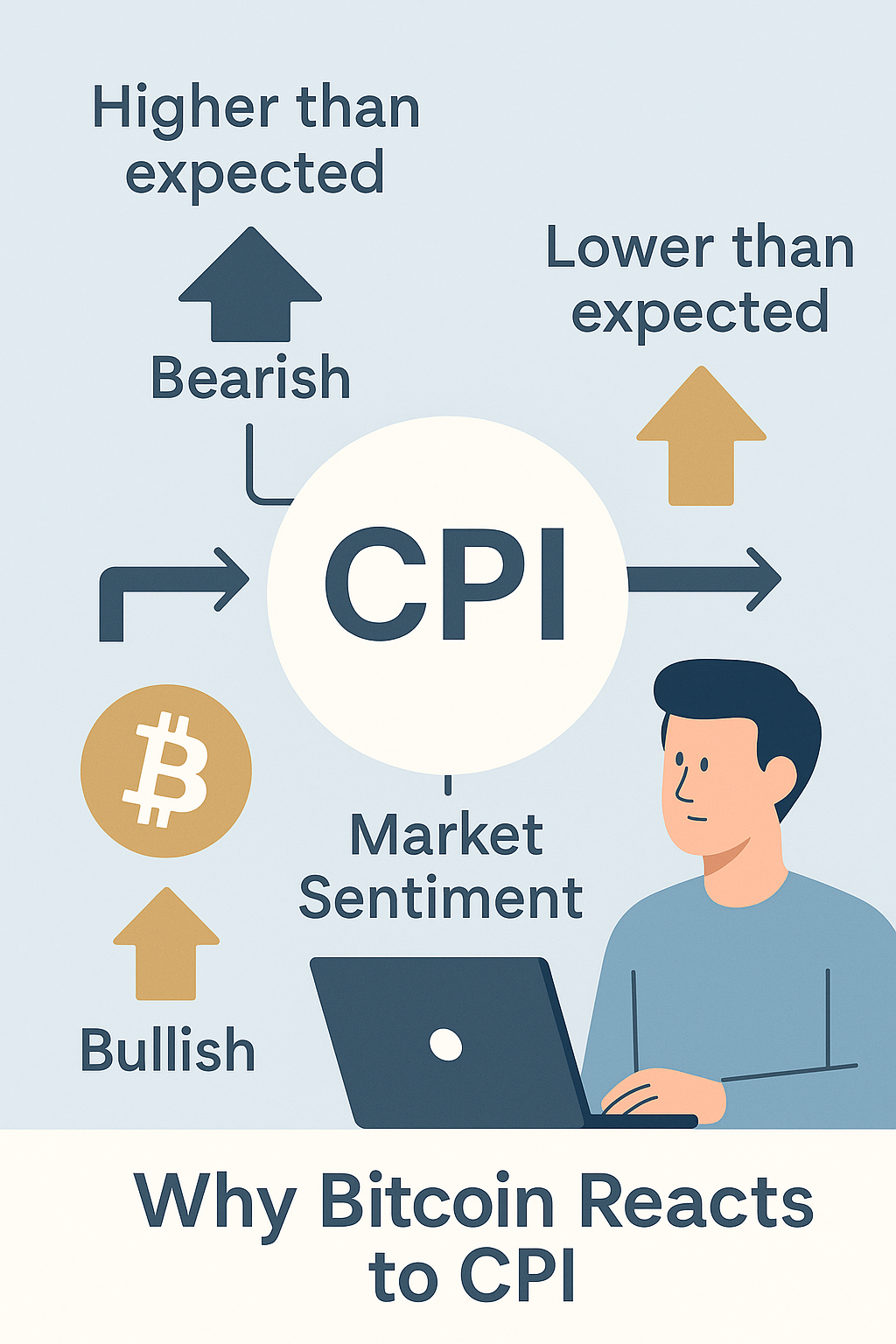
The chain reaction looks like this:
- Higher cpi → stronger inflation pressure
- Federal Reserve reacts → likely higher interest rates
- Higher rates → shift toward safer assets
- Bitcoin and stocks → increased volatility
In short, cpi is one of the clearest short-term signals for risk sentiment. I’m not trying to trade it—I just want to understand the environment I’m investing in.
To see the official composition and methodology, I often reference the U.S. Bureau of Labor Statistics: Official CPI Documentation.
3. What I Observed on cpi Days
Watching Bitcoin during a cpi release taught me more than any textbook could.
Right before the announcement:
- The chart goes quiet.
Right after the number drops:
- Volume spikes instantly.
- Large green or red candles appear within seconds.
- The market chooses a direction based on “expected vs actual.”
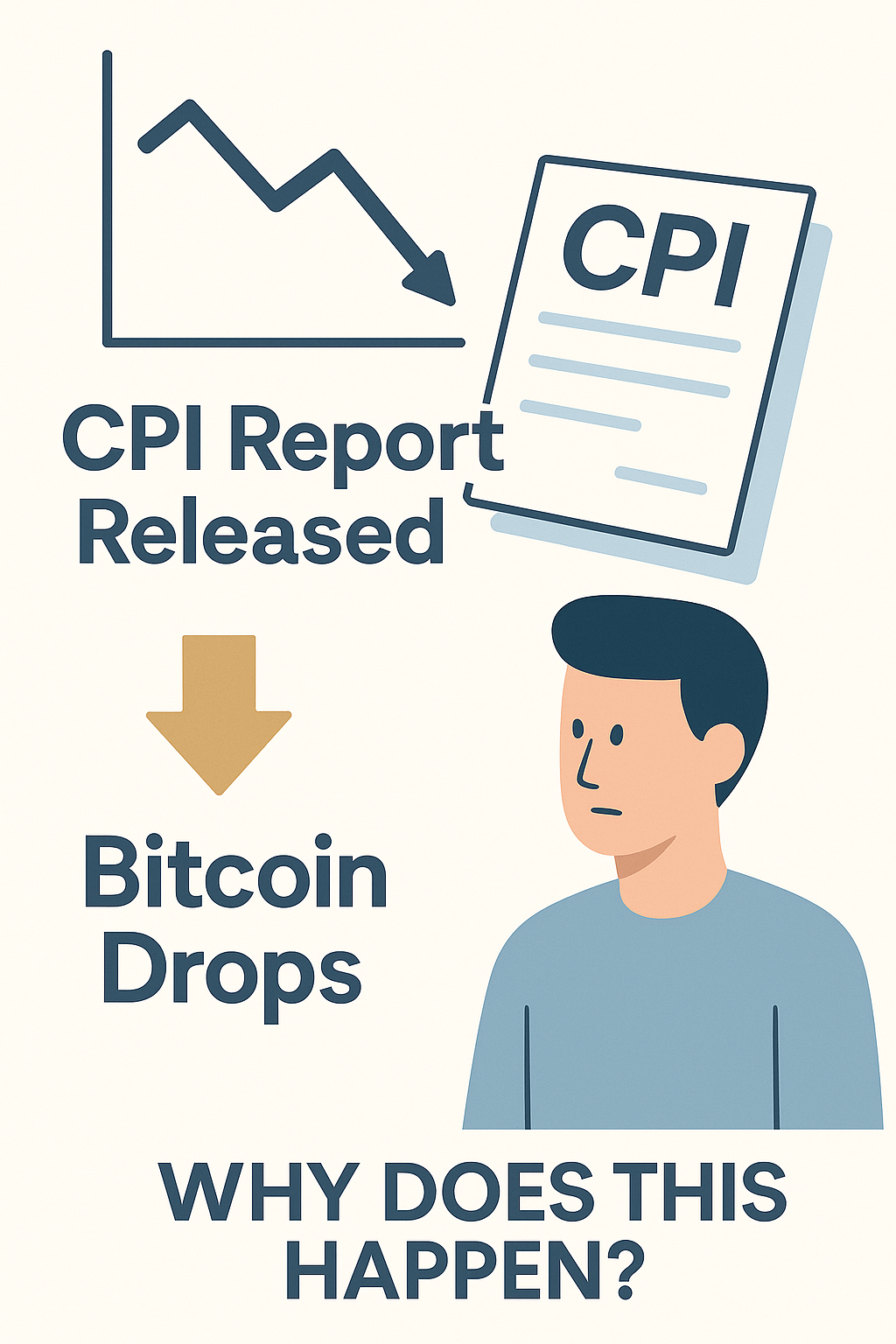
3-1. When cpi Is Higher Than Expected
- Inflation risk rises
- Rate cuts become unlikely
- Bitcoin often reacts with short-term downside
3-2. When cpi Comes In Lower
- Inflation pressure eases
- Markets anticipate friendlier policy
- Bitcoin frequently reacts with short-term strength
4. The Principles I Follow Now
4-1. Avoid large purchases around cpi releases
The volatility is unpredictable. My goal is to stay consistent, not to catch perfect bottoms.
4-2. Stick to my weekly ₩10,000 DCA
This rule protects me from emotional decisions—especially on macro-heavy days.
If you’re exploring DCA strategies, here’s a related post: My Bitcoin Dollar-Cost Averaging Walkthrough
4-3. Treat cpi as context, not a trading signal
I’ve learned that:
- My long-term plan comes from discipline
- My short-term awareness comes from knowing the macro environment
Understanding cpi doesn’t mean I have to react to it—it simply keeps me from being blindsided.
5. Closing Thoughts: Learning cpi Is Part of My Investing Story
I didn’t write this post to sound like an expert. I wrote it to document how a small DCA investor like me evolves—question by question, insight by insight.
Over time, I’ve realized that learning macro isn’t about predicting markets. It’s about understanding the environment in which my choices live.
I’ll keep building my position slowly. I’ll keep learning about macro indicators like FOMC, PCE, employment data. And I’ll keep sharing the journey, not as someone who knows everything—but as someone who keeps showing up.
If you’re learning while investing responsibly, I hope this story helps you take your next step into understanding cpi.