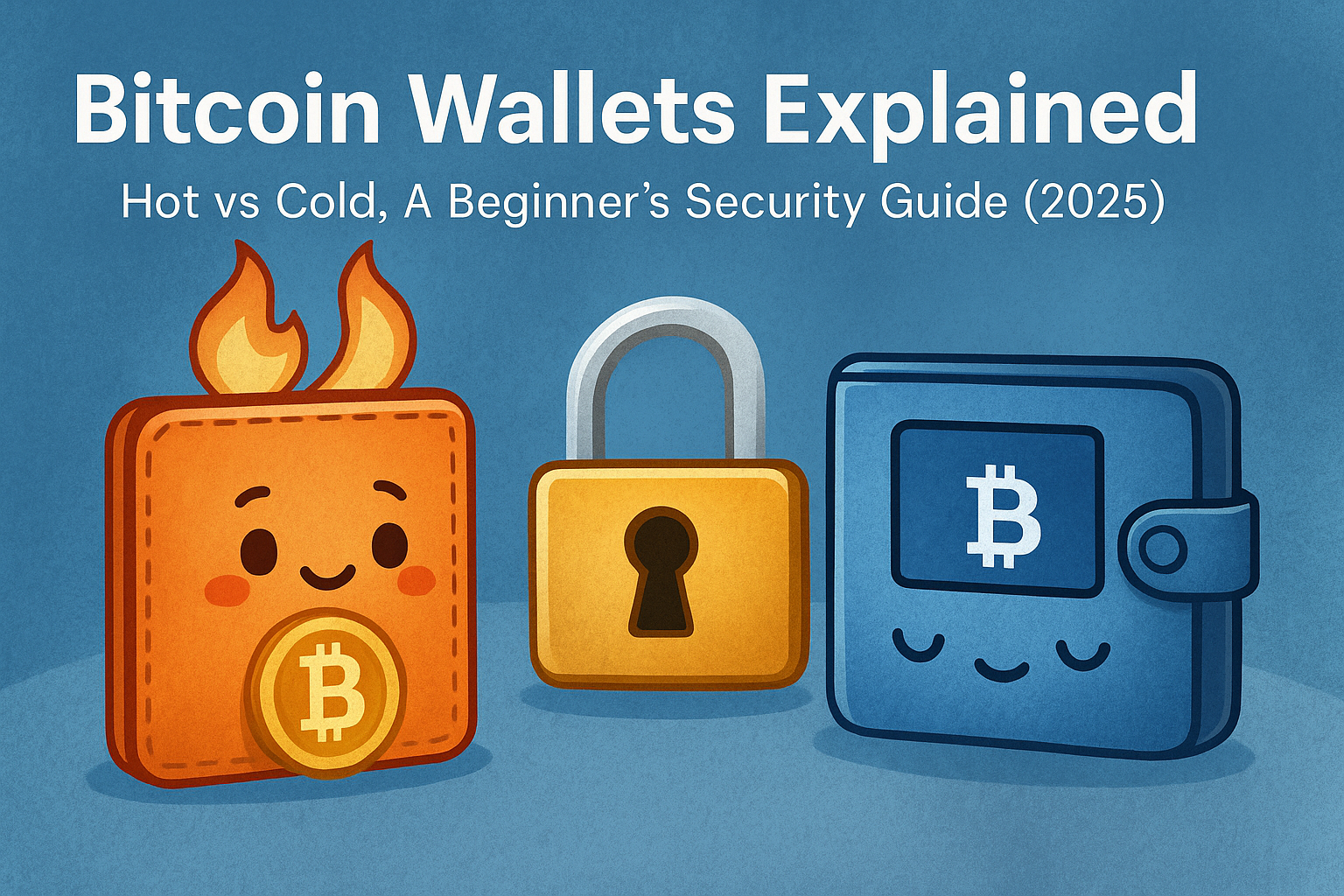
Bitcoin Wallets Explained: Hot vs Cold (A Study-Notes Security Guide, 2025)
I’m still learning about Bitcoin and put these notes together to understand the basics of hot vs cold wallets, why a wallet matters beyond exchanges, how to protect a seed phrase, and simple security habits like 2FA and withdrawal whitelists. This is a learning summary—not expert advice.
Why a Wallet Matters
When I first bought Bitcoin, I wondered if leaving coins on an exchange wallet was fine. As I read more, I learned that exchanges can face hacks, withdrawal delays, or regulatory issues. That’s why people repeat: “Not your keys, not your coins.” If I don’t control the private keys, ownership isn’t fully mine.
Hot Wallets: Pros/Cons & Examples
A hot wallet is connected to the internet (mobile, desktop, or browser extension). From what I’ve read, it’s great for accessibility and fast transfers, so it fits small amounts and short-term use. But it’s also more exposed to phishing and malware.
- Pros: easy access; fast sends; convenient for everyday use
- Cons: online attack surface (phishing, device compromise)
- Examples: Trust Wallet, MetaMask, Exodus
Cold Wallets: Pros/Cons & Examples
A cold wallet is kept offline (e.g., hardware wallet or paper wallet). From a security perspective, this seems better for long-term storage, because it’s isolated from online attacks. Downsides include initial cost and the need for careful handling.
- Pros: highly resistant to online attacks; ideal for long-term holding
- Cons: costs money; can be inconvenient; recovery can be tricky if lost
- Examples: Ledger Nano X, Trezor Model T, SafePal
Seed Phrase Basics & Storage
A seed phrase (12 or 24 words) is like a master key to restore a wallet. If it’s leaked, funds can be stolen; if it’s lost, recovery might be impossible. So, guides emphasize strictly offline storage.
- Offline only: write it on paper or use a metal backup; store securely
- No online storage: don’t keep photos or cloud/email copies
- Redundant backups: keep 2–3 copies in different safe locations
Security Checklist (2FA, Whitelist, Phishing)
- Enable 2FA: Google Authenticator or hardware OTP for logins/withdrawals
- Withdrawal whitelist: allow withdrawals only to pre-approved addresses
- Beware of phishing: verify official URLs/apps; avoid suspicious links/attachments
- Diversify storage: separate short-term small amounts (hot) from long-term larger holdings (cold)
What I’ve Learned So Far
I haven’t realized profits with crypto yet; I’m still learning. From reading guides and user experiences, my current understanding is:
- Hot wallets are convenient but more exposed to online risks.
- Cold wallets feel safer for long-term storage, even if less convenient.
- Many people combine both: hot for small/short-term, cold for larger/long-term.
- Seed phrase handling is the core of wallet security (offline, redundant, private).
Conclusion
Wallet strategy seems as important as ROI. For now, my takeaway is to match the wallet to the purpose: hot for short-term small amounts, cold for long-term larger holdings, plus offline seed storage with 2FA and whitelists. I’ll keep refining these notes as I learn more.
FAQs
1) Which should a beginner try first—hot or cold?
From what I’ve read, starting with a hot wallet helps you learn the basics; add a hardware (cold) wallet for long-term storage later.
2) What happens if I lose my seed phrase?
Recovery may be very difficult or impossible. That’s why offline, redundant backups are strongly recommended.
3) Is it okay to leave coins on an exchange?
Short-term might be fine, but many guides recommend personal wallets—especially cold wallets—for long-term or larger balances.
4) Which hardware wallet brand is best?
Popular choices include Ledger and Trezor. Compare price, UX, and supported assets to decide what fits you.