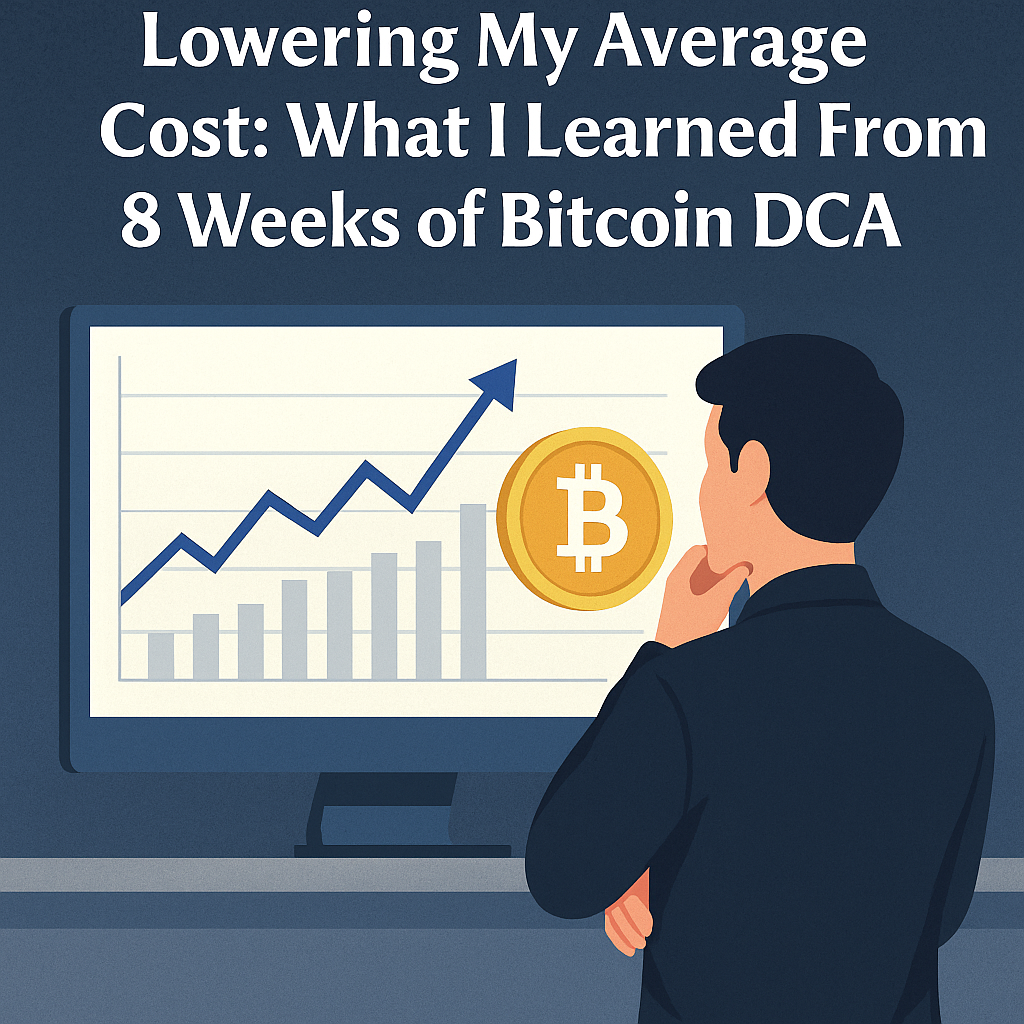
Lowering My Average Cost: What I Learned About DCA From 8 Weeks of Real Purchases
I’m not a pro investor—just documenting my small weekly Bitcoin buys and what they taught me about Dollar-Cost Averaging (DCA).
What DCA Is (and Why It Helps)
Dollar-Cost Averaging (DCA) means investing a fixed amount on a fixed schedule—regardless of price. When the price is high, you buy less; when it’s low, you buy more. Over time, this naturally pulls your average entry cost toward the middle instead of the extremes and makes volatility easier to live with.
My 8-Week Log (Real Numbers)
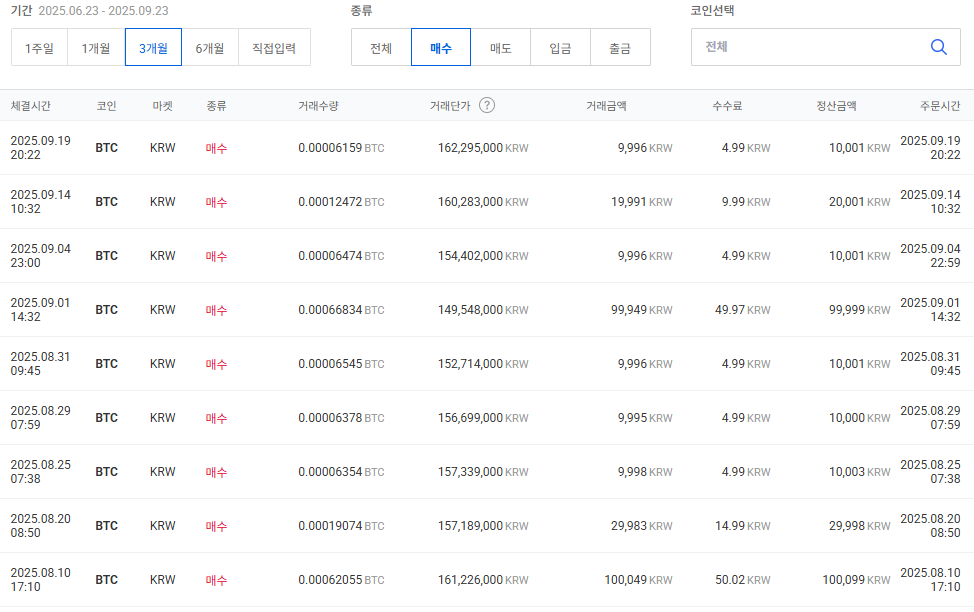
Below is the exact record I kept over the last eight weeks. Amounts are small by design; the point was consistency and learning.
| Date | Price (KRW) | Buy Amount (KRW) | Fee (KRW) | BTC Acquired |
|---|---|---|---|---|
| Aug 10 | 161,226,000 | 100,049 | 50.02 | 0.00062055 |
| Aug 20 | 157,189,000 | 29,983 | 14.99 | 0.00019074 |
| Aug 25 | 157,339,000 | 9,998 | 4.99 | 0.00006354 |
| Aug 29 | 156,699,000 | 9,995 | 4.99 | 0.00006378 |
| Aug 31 | 152,714,000 | 9,996 | 4.99 | 0.00006545 |
| Sep 01 | 149,548,000 | 99,949 | 49.97 | 0.00066834 |
| Sep 04 | 154,402,000 | 9,996 | 4.99 | 0.00006474 |
| Sep 14 | 160,283,000 | 19,991 | 9.99 | 0.00012472 |
| Sep 19 | 162,295,000 | 9,996 | 4.99 | 0.00006159 |
- Total invested: ~300,000 KRW
- BTC accumulated: ~0.00196 BTC (fees excluded from BTC calc above)
- Result: My average cost settled around the mid-range of these prices—not the extremes.
What I Actually Felt While Doing It
- Less decision fatigue. I stopped asking, “Is this the top?” I just bought on the schedule.
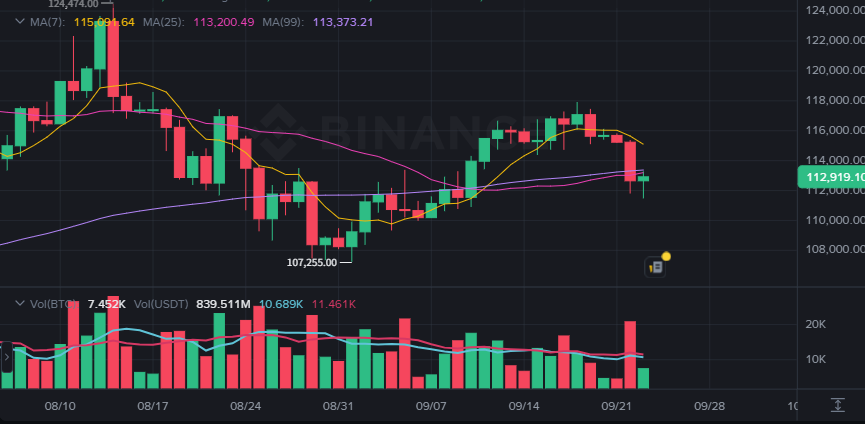
- Volatility became data, not drama. Swings from 149M to 162M KRW looked big, but my average cost moved slowly.
- Consistency compounds. Small amounts don’t feel impressive week to week, but the log makes the progress real.
How to Run DCA the Right Way
1) Define constraints first
- Choose a fixed amount you can truly sustain (I used 10,000 KRW units).
- Pick a fixed cadence (weekly works well). Put it on your calendar.
- Create a simple tracking sheet (date, price, amount, fee, BTC, running average).
2) Automate what you can
- Use recurring reminders or exchange features (if available) to avoid “I’ll do it later.”
- Record immediately after each buy so your log never falls behind.
3) Keep the long view
- DCA is not a quick win strategy. Give it 6–12 months at minimum.
- Judge the process (consistency, average cost behavior), not just short-term P/L.
Takeaway
DCA isn’t about timing the market; it’s about training your behavior. Over these eight weeks my average entry price drifted toward the middle, and my stress dropped with it. I’m still learning—and still small—but the routine is doing exactly what it’s supposed to do.