Why CPI Matters to Bitcoin More Than You Think
After getting a basic understanding of what CPI is, one question kept coming back to me: why CPI matters to Bitcoin. At first, it felt excessive that a single inflation report could influence the price of a digital asset so noticeably. But after watching several CPI releases and paying closer attention to how market narratives form around them, I started to see this pattern differently.
CPI alone doesn’t move Bitcoin — but it sets the tone
It would be an oversimplification to say that CPI alone causes Bitcoin to rise or fall. Bitcoin reflects many factors at the same time—market sentiment, liquidity conditions, global events, and technical flows, among others. In that context, CPI feels less like a direct cause and more like part of the background that shapes the market’s mood.
Markets react to expectations, not just numbers
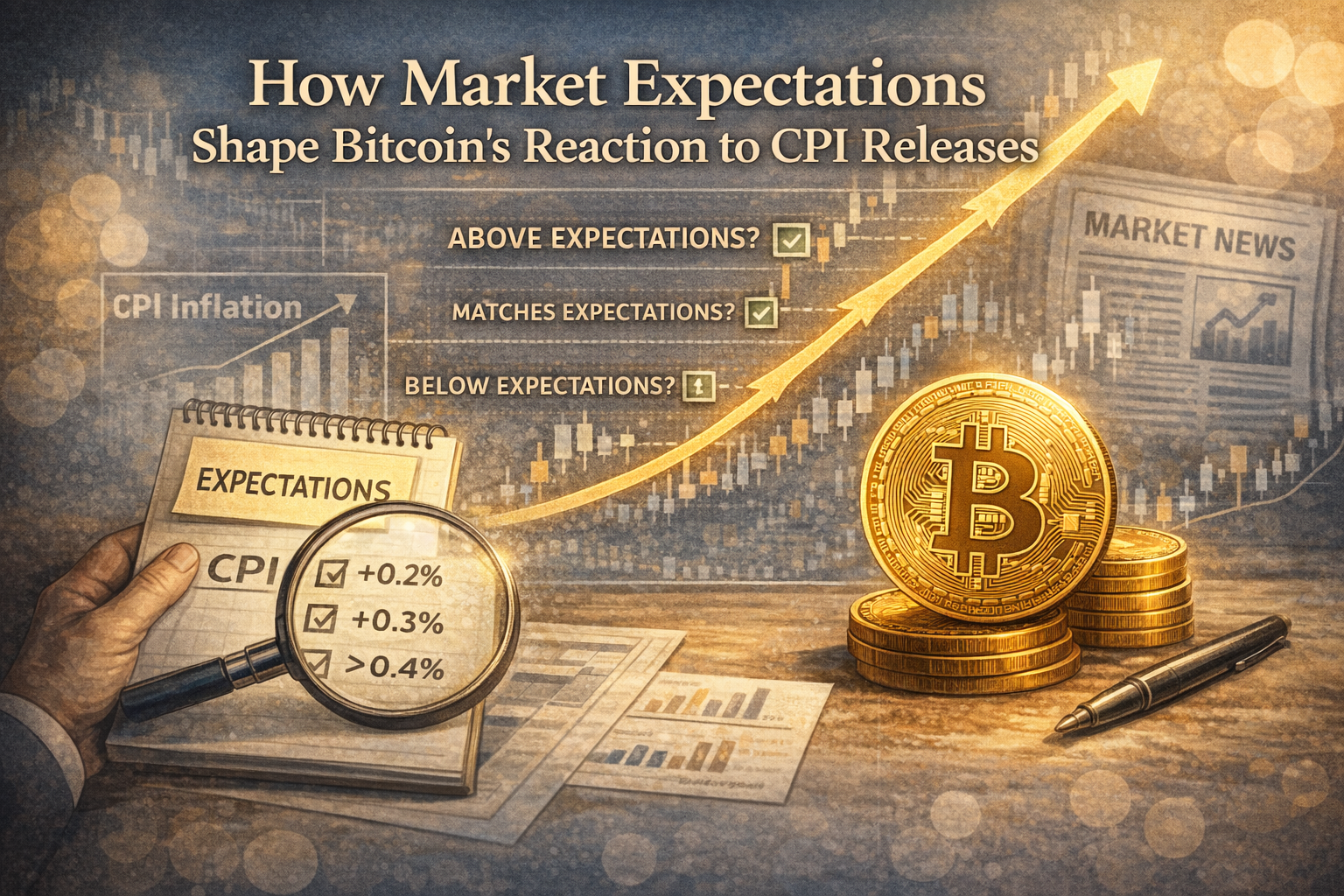
Watching CPI releases over time, one thing became clear to me: the reaction often depends less on the number itself and more on what the market was expecting beforehand.
The same CPI figure can trigger very different responses depending on whether it comes in above expectations, matches what was already priced in, or challenges the prevailing narrative. This is when I started to think Bitcoin reacts not simply to CPI data, but to how that data reshapes expectations and interpretations.
CPI is where liquidity conversations often begin
Once CPI is released, the focus of market discussion tends to shift quickly. Inflation leads to conversations about policy, policy leads to interest rate expectations, and those expectations eventually connect to liquidity.
This isn’t a fixed formula, and it doesn’t unfold the same way every time. Still, CPI often serves as the starting point for how the broader environment is discussed and framed.
CPI days feel different — and that matters
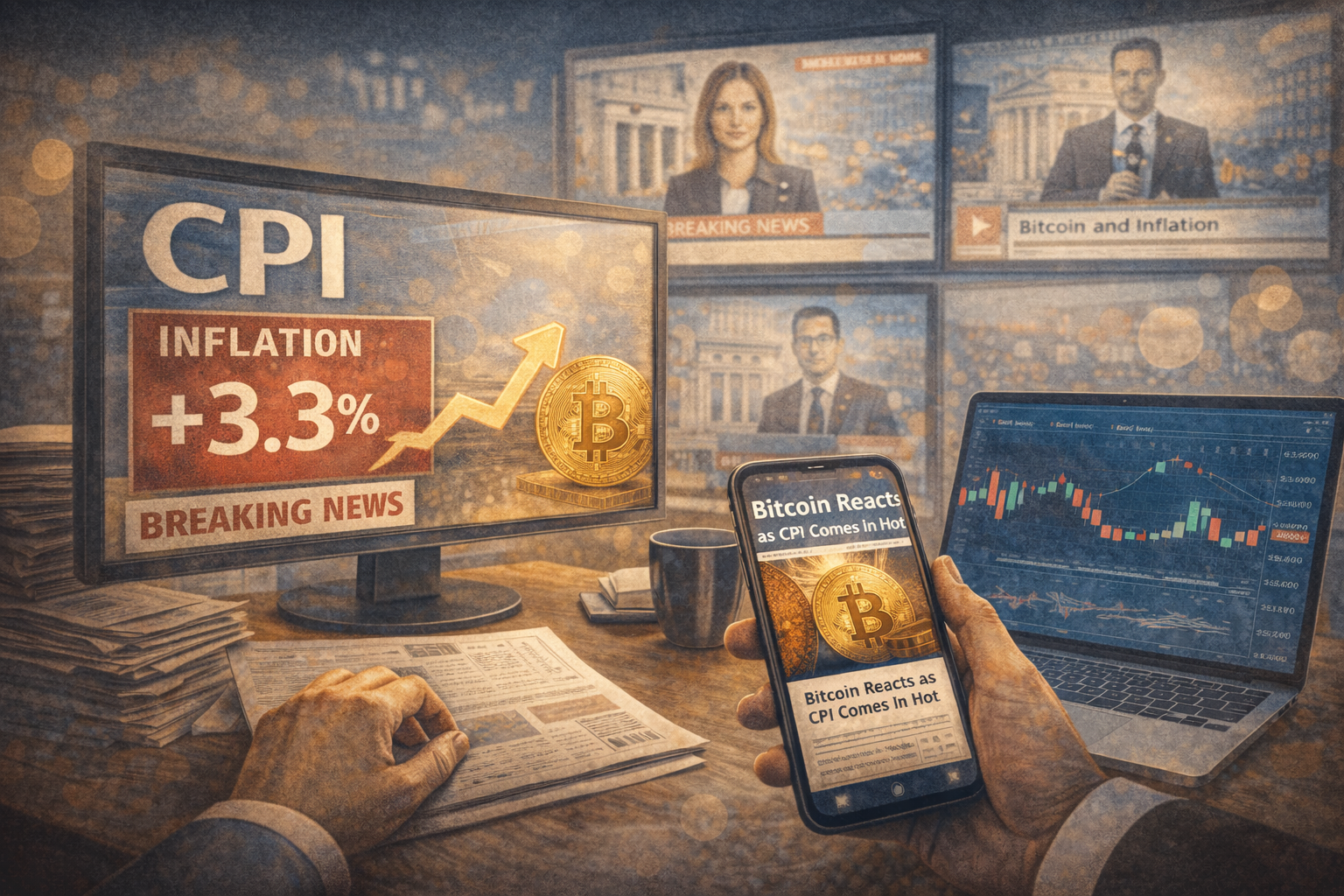
One personal observation I keep coming back to is this: markets feel different on CPI release days. There tends to be more news coverage, faster interpretations, and more weight placed on price movements that might otherwise seem routine. Even when Bitcoin doesn’t move dramatically, it often feels like the market is on alert, waiting to react.
How my perspective changed after understanding CPI’s role
There was a time when CPI days made me focus immediately on direction—up or down. Over time, that approach shifted. I no longer treat CPI as a trading signal, but as a reference point for interpreting the market environment.
Instead of asking what to do, I now pay more attention to how expectations changed, how the tone of coverage shifted, and whether the overall mood became more tense or more relaxed.
Closing thoughts
CPI is not a button that directly moves Bitcoin’s price. But it often works as a shared lens through which many participants view the same moment in time.
Rather than using CPI to predict price movements, I find it more useful as a way to understand the conditions and narratives surrounding the market.
Related reading
- CPI Explained for Beginners — start here if you’re new to CPI.
Official reference: U.S. Bureau of Labor Statistics (BLS) CPI overview
Next in this series: Does High Inflation Always Crash Bitcoin? (B3) (Add the internal link after you publish B3.)